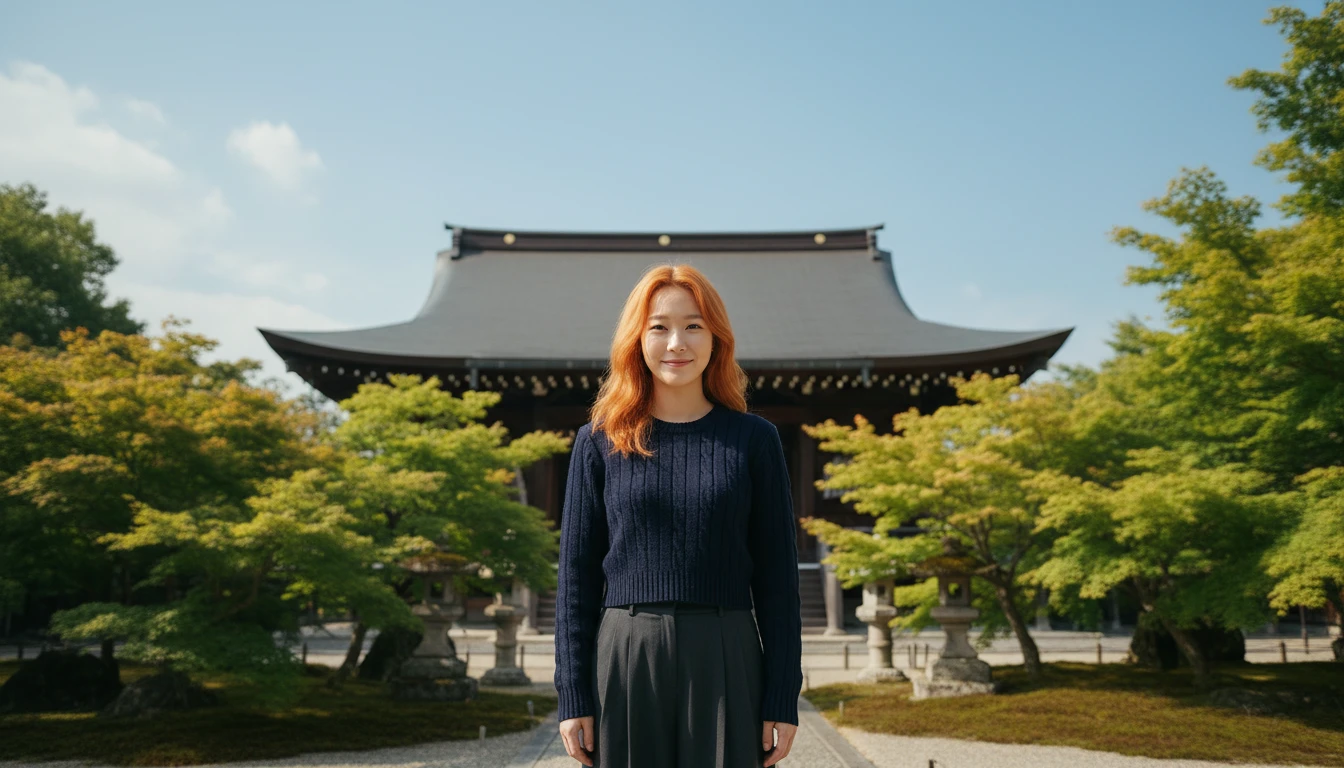
HEADROOM COMPOSITION EXAMPLE — the subject is framed so that the classical headroom rule is clearly demonstrated. There is a small but visible gap between the TOP of her head and the TOP edge of the frame — approximately 10 to 15 percent of the total frame height. Her eyes are positioned exactly at the upper-third line of the frame. The composition is NOT cramped (no head touching the top edge) and NOT too loose (no vast empty sky above her head). The professional textbook balance of headroom is the defining feature. Medium close-up framing (chest to head). Hanok village softly blurred behind.
HEADROOM COMPOSITION EXAMPLE — the subject is framed so that the classical headroom rule is clearly demonstrated. There is a small but visible gap between the TOP of her head and the TOP edge of the frame — approximately 10 to 15 percent of the total frame height. Her eyes are positioned exactly at the upper-third line of the frame. The composition is NOT cramped (no head touching the top edge) and NOT too loose (no vast empty sky above her head). The professional textbook balance of headroom is the defining feature. Medium close-up framing (chest to head). Hanok village softly blurred behind.
Headroom
Proper empty space above the subject's head. A classical composition rule for balanced framing.
When to use
Any time you frame a person — this is the classical rule for balanced vertical placement. Master this before breaking it intentionally.
Pro tips
- •Prompt "classical headroom, 10-15% empty space above head, eyes at upper third line"
- •Too tight (no space) feels cramped; too loose (head mid-frame) feels floating
- •Use "eyes on the upper third line" as the anchor — headroom follows automatically